
Every major technological shift comes with noise. Jokes, nitpicking, moral panic, and endless debates about what is “good enough” and what is “not ready yet.”
AI is no different.
Right now, a lot of discussion revolves around what can realistically be automated. What tasks are safe. What jobs are next. What AI still cannot do.
That discussion sounds practical. But it quietly misses where the real constraint already is.
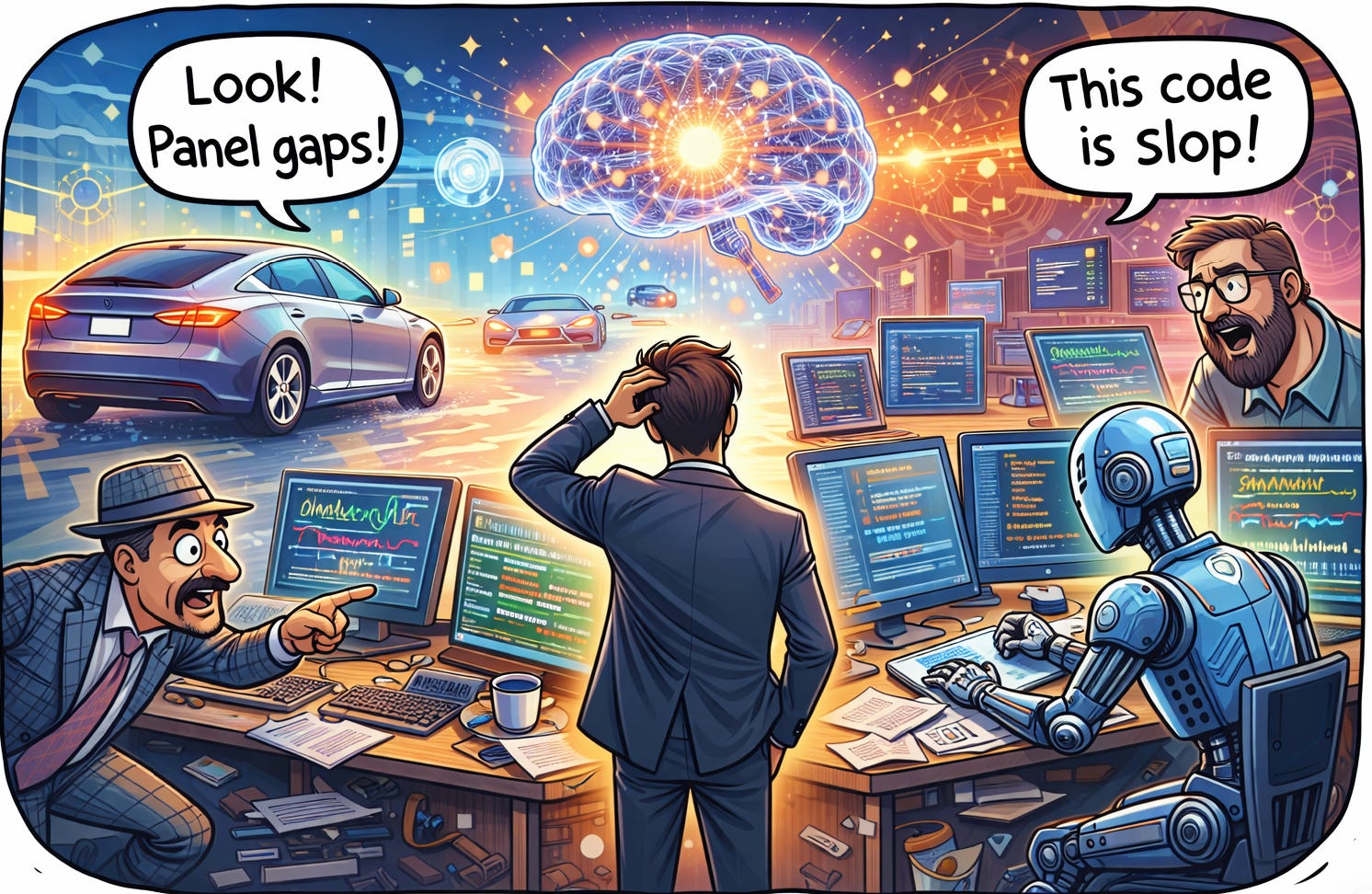
Execution Is No Longer the Hard Part
AI removed execution limits faster than humans can adapt.
One person can now do what used to require a full team. Write, design, code, analyze, research, iterate. The tools are not perfect, but they are more than capable.
The bottleneck is no longer execution.
The bottleneck is attention, judgment, and prioritization.
We already see this inside teams and large organizations. Not moving forward is rarely caused by lack of tools or talent. It happens because decision-making cannot keep up with the volume of possibilities. Too many options. Too many paths. Too many things that can be done right now.
Brains choke long before software does.
Process automation is largely solved. The next real shift is decision-making. Choosing what matters. Choosing what to ignore. Choosing what to ship and what to kill.
This pattern repeats across industries.
Tesla Criticism Misses the Category Shift
Look at how people talk about Teslas.
Panel gaps. Plastic interiors. Water leaks. Usually compared to German cars and traditional craftsmanship.
Meanwhile, the car drives itself.
That single fact changes the category. Once autonomy enters the picture, interior trim stops being the defining metric. Judging a self-driving car by legacy standards is like comparing horse carriage upholstery after the engine was invented.
The comparison is not wrong. It is irrelevant.
Autonomy changes what the product even is. And today, no traditional manufacturer is close to matching that capability at scale.
History shows this pattern clearly. When a new category appears, people cling to familiar metrics because they feel safe. Familiarity is comforting. It lets people avoid confronting the implications of change.
The Same Thing Is Happening in Software
Now look at the “vibe coding” debate.
Software engineers mocking AI-generated code. Complaints about structure, cleanliness, style, maintainability. Some of it is valid. Much of it is missing context.
After more than 25 years working with in-house teams and vendors of every size, I can say this without hesitation. Humans have shipped unmaintainable garbage for decades. Production systems full of hacks, shortcuts, copy-paste logic, and bugs no one understands.
AI introduces a new kind of weirdness. But it also removes excuses.
When execution becomes cheap, judgment becomes visible. When anyone can generate code, taste and discipline matter more. Sloppiness gets exposed faster. Competition increases. Comfort disappears.
That pressure is healthy.
It forces developers to think more carefully about architecture, constraints, and outcomes. Not because AI is perfect, but because mediocrity is harder to hide.
The Common Failure Pattern
Across AI automation, self-driving cars, and vibe coding, the pattern is the same.
People obsess over surface flaws while the underlying category shifts.
They argue about polish while leverage explodes.
They debate aesthetics while the cost of iteration collapses.
They defend old standards because those standards once defined their advantage.
History is not kind to that mindset.
The winners are rarely the people who perfect yesterday’s metrics. They are the ones who recognize when the scorecard itself has changed.
The Real Question for 2026
The uncomfortable truth is this.
Most people are no longer blocked by execution. They are blocked by decisions.
What to build.
What to ignore.
What to stop doing.
What actually matters.
AI did not eliminate the need for humans. It raised the bar on judgment.
So the real question going into 2026 is not what AI can or cannot do.
It is this.
What is actually bottlenecking you now.
Execution. Or decisions, taste, and judgment.